This is Part Two of an eight-part series entitled Blog Life: The Ultimate Guide to Making a Living From Blogging.
In this article I reveal the most commonly used revenue models for generating a reliable income from your blog. These revenue models, explained in further detail below, are as follows:
- Display Ads
- In-Text Ads
- Native Ad Networks
- Sponsored Posts and Endorsements
- Affiliate Marketing
- Cost Per Lead Marketing
- Selling Your Own Information Products
Foreword
Unless you are a post-modern punk rocker looking to share your anti-Monarchical rants with the world, or an arthouse photographer seeking an indie outlet to publish 35mm black and white selfies, you are probably starting a blog with the goal of eventually generating a reasonable income. How do I know this? Because people are searching for ways to make money from blogs thousands of times every, single day.



Back in the day when SEO simply meant stuffing your blog with the same phrase in every second sentence, blogging to make money was easy.
Too easy, in fact.
You spent a few days creating a site focussed on your desired niche, bought a few backlinks to boost the rankings of your blog, set up some deceivingly natural looking Google Adwords ads and you watching the dollar signs roll in. I did this successfully with a WordPress blog I formerly owned and built from the ground up, TshirtAlert.com, one of my all-time favourite ventures, from which I learnt many of the fundamental techniques for successful blogging through sheer trial and error.
While the ‘glory days’ of blogging purely to exploit search engines and ad networks are well and truly over (thank goodness), there’s still some serious coin to be made from running a successful blog. All you need is passion, a niche to focus your efforts on, a revenue model and some good ol’ fashioned elbow grease. Since you’re supply the grease, I’ll happily assist you with the rest, and today’s topic of conversation is revenue models for bloggers seeking a passive income.
Blogging Revenue Models
Every blog is different. For starters, every author attracts a unique audience – no two blogs are visited regularly by exactly the same set of people (well at least, none that I know of!).
Not only that, but every blogger has a unique style that sets them apart from others. This is reflected in the topics they cover, but also their tone and writing style, particularly when it comes to the mediums they choose to publish most frequently (e.g. ‘Top 10 best xxxx’ lists, or detailed infographics, or ‘How To’ videos, or even posts purely consisting of images related to a specific theme). Just like humans, every blog post, and therefore every blog, is different.
For this reason, there is no ‘best’ revenue model that I can recommend without some trial and error, as what works for one blog about, say, ‘Tech Startups’ or ‘Flower Tapestry’, may not work for another. What I can tell you however, is that there are six key methods of generating income from your blog, and these are:
- Display Ads
- In-Text Ads
- Native Ads
- Affiliate Links
- Selling Products
- Sponsored Posts
In time, you will probably make an income from a variety of these channels, however for now what you need to do is choose one primary revenue model to focus on. Just like a game of Super Mario Brothers, once you crack one level, you can move onto the next. So without further ado, is an overview of each blog revenue generation method.
1. Display Ads
If you have a self-hosted WordPress blog and you have visitors to your website, then you can run ads. There are countless designs and specifications for online ads, however they can usually be summarised in one of three formats, text links, native ads, or image ads (also known as a display advertising).
Whilst selling ad space manually is certainly an option and can often yield premium prices, the prospect of becoming somewhat like a door-to-door salesman is not all that appealing to those seeking a passive income. The fact is, the most efficient and passive method of gaining access to a slice of the global online ad revenue pie via your WordPress blog, is to sign-up to an Ad Network. An Ad Network essentially acts as a Sales Rep working on your website’s behalf (as well as on behalf of thousands of other websites), selling your ad space to anyone who wishes to bid on it.
If this entire concept sounds completely absurd, I suggest you watch this video on how the world of ‘bidding on ad space’ works, more commonly known as Programmatic Buying.
While there are a myriad of Ad Networks who place ads programmatically on blogs and websites just like yours, some are far more reliable and reputable than others. If you want to maximise your chances of getting paid, not to mention serving wholesome advertisements on your website, I strongly suggest considering the following x advertising options to generate passive revenue on your blog.
Google Adsense
Google AdSense is a program established by Google for webmasters to generate advertising revenue. It allows blogs and websites who sign up to the Google Display Network (GDN) through Adsense to serve image and text based ads (and sometimes even rich media ads) that are targeted to site content and audience.
The revenue you can generate from these advertisements is calculated either on a Cost Per Click or Cost Per Impression basis.
The way to identify ads served by Google Adsense is to look for the small blue triangle ‘i’ icon in the top or bottom right corner. This denotes the ‘Adchoices’ organisation, a Google-backed regulatory body for online advertising.
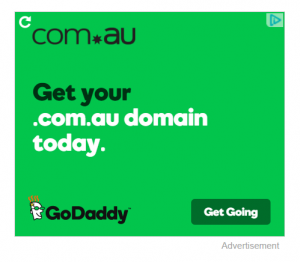
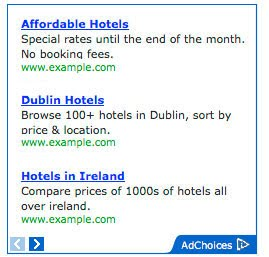
How much can you expect to make?
On average (i.e. at a CPC of 25c), you will earn $100,000 per year if your blog attracts 100,000 visitors per day (if you need proof, check out this article http://www.minterest.org/how-much-traffic-do-you-need-to-make-money/ ).
The harsh reality is that most blogs receive far less traffic than this, and are more likely to receive a couple of hundred visits per day. At 100 visits a day, the passive income generated from Adsense equates to just a couple of dollars per month, depending on your niche. Of course, every dollar is another on the pile towards your next holiday, so Adwords is certainly worth adding to your blog as a truly passive form of income.
(For the record, I personally wouldn’t bother experimenting with the Cost Per Impression (CPM) model offered by Google Adsense. The majority of Google ad inventory is bought and sold on Cost Per Click (CPC) basis, and I suspect that Google yield more towards what they know).
Would I recommend Display Ads as the primary source of income from your blog?
If your blog is attracting 10,000 sessions or more per day blog advertising will earn you a decent chunk of passive income. If not, you may be lucky to pay for much more than your website’s hosting.
2. In-text Ads
Blogs tend to touch on a wide variety of topics and products, and while hand-picked ads which are perfectly set within context of the content surrounding them is the ideal way to maximise relevancy to your readers AND also your ad revenue, it’s simply not a practical concept for the average blogger. Why? Because as a blogger, you would have to hunt down a specific retailer for every product that you mention, every piece of cloud-based software you review, every audio book you download…and then you would need to negotiate an advertising deal or sign-up to their affiliate program. Multiple this by the thousands of good and services you will mention in any given year, and the time this would take would be completely crippling to the progress of your blog.

This is why in-text ads are an ideal ad format for bloggers. What in-text do, is ‘read’ through each word within each blog post you publish, and automatically insert contextual ads within the text (usually in the form of a hyperlink applied straight to the product or phrase of relevance). Usually the implementation is a simple as adding one code snippet (or alternatively, a WordPress plugin) to your blog and the in-text ads will auto-magically start appearing right away.
In theory, the concept of in-text contextual advertising should surely be the best and most favoured style of advertising on the internet. After all, it’s highly relevant, it’s completely on topic, it’s non-invasive, and it doesn’t take over your screen without permission. That’s all true….but where it can sometimes fall short, like most automatic solutions, is in your abilities to control the links it generates, and sometimes this can ultimately end up annoying your readers. Your best bet is to try in-text ads for yourself and weigh up the revenue potential versus the user experience.
Here are the top three in-text ad networks currently available:
Chitika

Chitika is one of the oldest in-text advertising platforms in existence, having been around in 2003. It has grown from a purely ‘in-text’ ad network to now offering a range of advertising formats. In recent years its reputation has suffered a few blows, particularly when the earnings for many bloggers started to drop in comparison to Google Adsense 5-6 years ago. Another drawback is their limited ad relevancy, largely due to the fact that there are far less advertisers using this platform than Google Adsense. For this reason, if you are looking to generate ad revenue from your blog, I would suggest running Adsense as your primary platform and Chitika as a secondary platform in parallel.
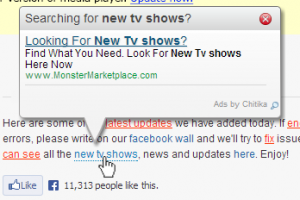
(It’s worth noting that Chitika also offer display advertising as another potential source of income. While this is an attractive proposition, I would suggest letting Google occupy this prime real estate due to its better selection of advertisers and therefore increased relevancy of ads…and we all know that the higher the relevance, the higher the chances of a click, which of course equates to a payout!)
Infolinks

One of the most sophisticated pureplay contextual text-ad providers is Infolinks. While these guys are still a bit smaller than Adsense and Chitika, personally I think they offer a really slick product which is hard to look past.
Infolinks offers a range of different ad types including:
- inText: Which double underlines valuable keywords and displays an ad when a user hovers over them
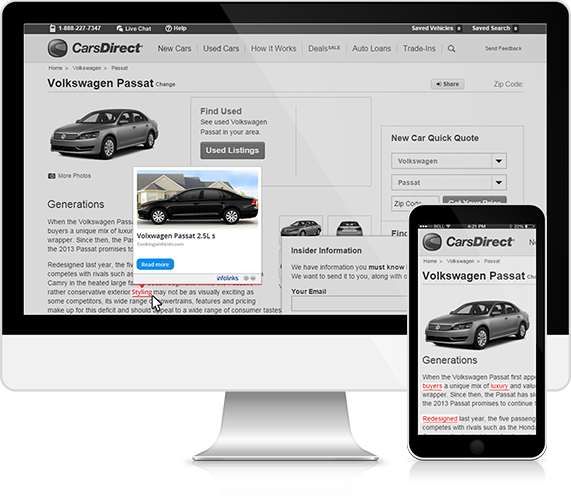
- inTag: Places a link unit within a webpage’s content with valuable contextual keywords
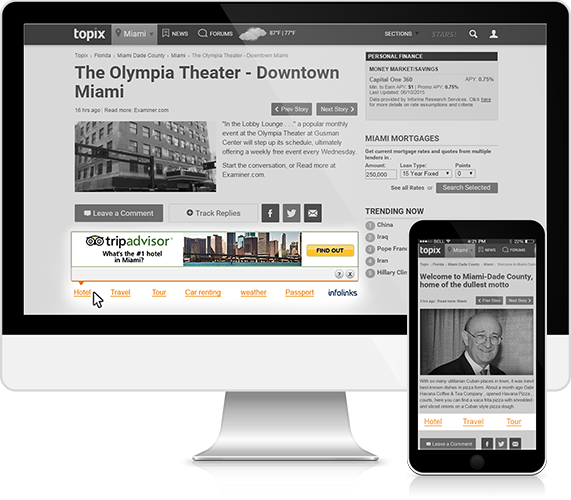
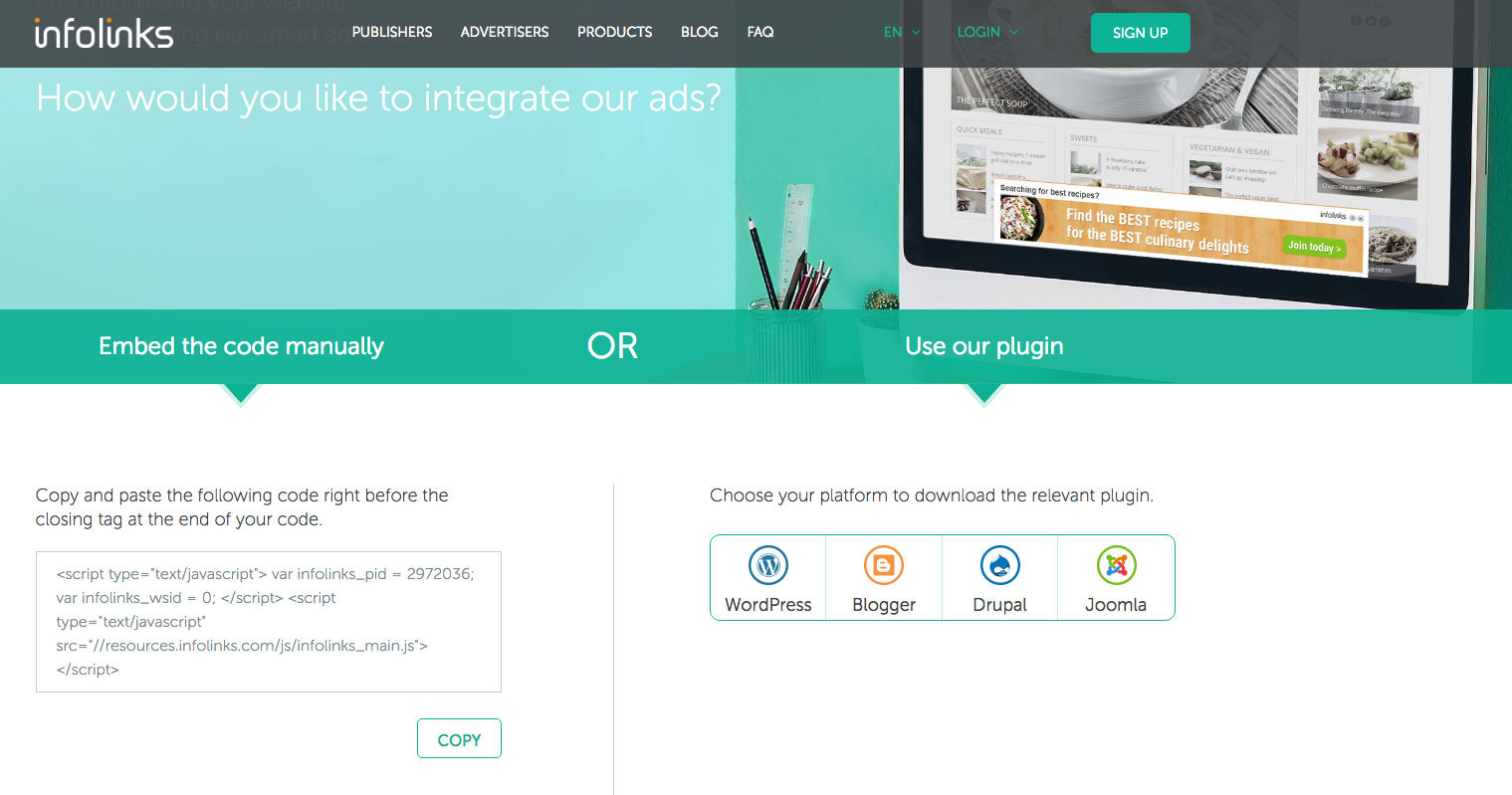
The setup process for Infolinks is super fast and straightforward. I’d recommend trialling this platform vs Chitika (not at the same time, one month of each) and then choosing the winner of this trial for the long-term.
Viglink
Now for something completely different! Viglink is a system that is unique within the in-text ad space. Strictly speaking, Viglink is not an in-text ad, but rather, an affiliate link re-writing service. Nevertheless it still feels most applicable to the in-text category due to the way the tech works. What Viglink does, is convert standard outgoing links into affiliate links. For example, if I was writing a blog post about the latest Macbook Pro and linked to it, and then a visitor to my site followed this link and made a purchase, Viglink would give me commission for this sale.
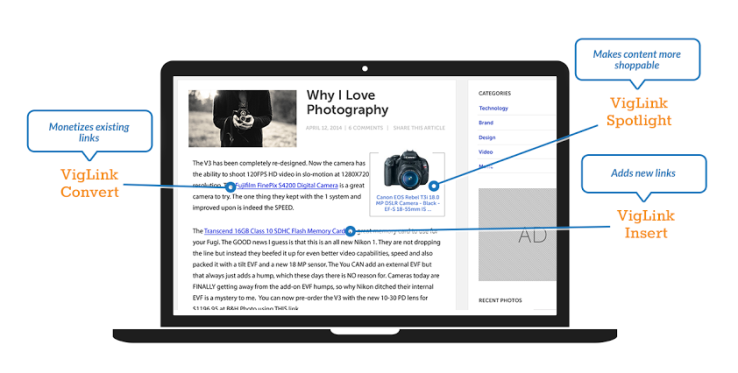
The best part about Viglink is that you don’t need to be signed up for an individual affiliate account on all networks. It automates the process of affiliate registration and management within one central administration console. As an affiliate of many, many, networks which each require their own login details and affiliate link configurations, I can tell you that this is a pretty attractive proposition.
If you are extremely active in the affiliate marketing space already, Viglink may not be for you. However if you are after an automated solution to affiliate marketing to dip your toe into the water, then I urge you to give it a run for 2-3 weeks and then assess the result from there.
Skimlinks

Much like Viglinks mentioned above, with the Skimlinks technology you are able earn commission on goods and services that you link to within your blog (even if you haven’t coded the URL as an affiliate link in the first instance). What this means, is if you are too lazy, too busy, or simply forget to add an affiliate URL to your blog’s outgoing links, you can rely on Skimlinks to pick the slack. Of course, they do take a small comission of their own for each sale generated from a Skimlinks text ad (because let’s face it, if Skimlinks didn’t exist you wouldn’t have received the commission at all), I think this is completely fair given the amount of time this could save you, not to mention the incremental revenue it can bring in.
Skimlinks offers a number of different revenue generating opportunities:
- SkimLinks: The flagship offering, which monetises untapped links on your blog
- Audiences by Skimlinks: Earn revenue from the data Skimlinks collects about your visitors
- Skimwords: This tool automatically converts words in the body of your content into money making links, similar to the way Infolinks and Chitika work
I am totally onboard with the proposition offered by Skimlinks (as well as Viglink). Affiliate account management (signing up, remembering multiple passwords, generating links, inserting the links into your blog posts, adding URL rewrites, requesting payments, and the list goes on) can be an absolute nightmare at the best of times. Skimlinks completely streamlines this process, in fact it almost eradicates it all together.
I am yet to use Skimlinks or Viglink however once I have trialled both platforms I will be posting my results and preferred platform for future use. The main thing I will be looking for is the affiliate coverage (i.e. does it span across every major affiliate network and program, so that I can trust it to generate as many lucrative yet relevant affiliate links as possible on my blog). I’ll let you know.
How much can you expect to make?
When it comes to in-text ads, there’s a mixed bag of revenue models, as Chitika and Infolinks offer CPC payouts, and Viglink and Skimlinks generally offer CPA payouts, both of which can vary greatly depending on the subject matter.
As a rough guide for Chitika/Infolinks, you can expect to generate around $0.5 per 1000 impressions (otherwise known as a $0.5 CPM). This means that if you receive 1000 visitors per day, that each view 3 articles on your blog, you will make over $40 a month. Of course, if your blog’s subject matter is richer in value you can expect these numbers to increase significantly, which is why a trial is so worthwhile.
For Skimlinks and Viglink, which I am yet to trial at scale, the CPM I have been told of from peers sits at around $0.1. This equates to around $10 per month in ad revenue for the same levels of traffic.
Would I recommend In-Text Ads as the primary source of income from your blog?
I would NOT recommend In-Text Ads as the primary source of income for your blog, but they can make a great supplementary income stream when run in parallel with a primary channel such as Adsense or Affiliate ads. I’d suggest trialling all of the above, and then selecting at most one CPC provider (either Chitika or Infolinks), and one Affiliate provider (either Skimlinks or Viglink).
The truth is, while the in-text ads do sound the most relevant of all ad types in theory, other ad types such as Adsense and manual Affiliate links offer more control over their subject matter, their look and their feel, and not surprisingly are therefore more lucrative than in-text links.
3. Native Ad Networks
Native ads are defined as ‘advertising placements that are designed not to look like advertising, but rather, as a pieces of content that naturally fits within the surrounding environment’.
Confused? A picture tells a thousand words, so here is an example to shed some light on how these ads ‘in disguise’ can appear:
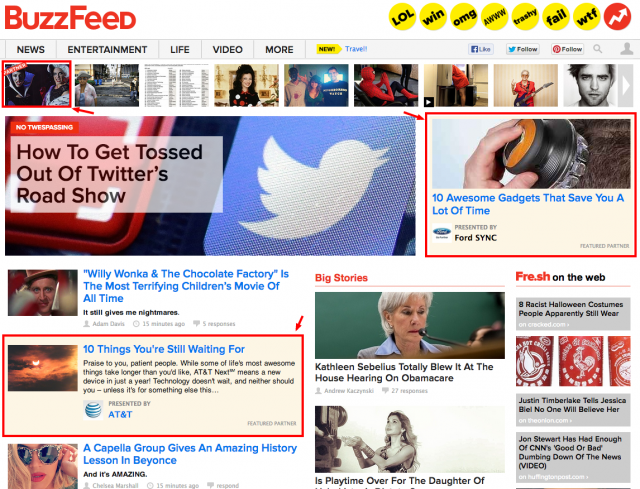
As you can see, native ads sit within a widget are are made of up of article thumbnails with teaser text. Rather than looking like a traditional ad, they appear to be promoting ‘related content’ that the reader may be interested in checking out, this content just happens to live on other blogs and websites (i.e. the advertisers).
Native content works particularly well in blogs, because, let’s face it, it’s a rip-off of real WordPress functionality. The WordPress community invented ‘Related Posts’ as a widget (there are many plugins available specifically for this purpose), and native ad networks were almost certainly inspired by this concept.

Regardless of who the credit should go to for the invention of Native Ad widgets, since they are ads in disguise, they should perform quite well for you from an ad revenue perspective. Here’s seven of the top Native Ad networks you should consider implementing to make money from your blog:
Outbrain & Taboola & Adblade
Outbrain, Taboola and Adblade are the leading native advertising networks. They pay their publishers handsomely (often of 25c per ad click in the publishers’ pocket) and have high click-through rates in comparison to other ad formats mentioned in this article. However there is a catch that I must share with you before you get too excited and quit your day job!

The catch is related to the minimum traffic requirements for all three of these native ad networks. Outbrain, Taboola and Adblade require your blog to attract at least 500,000 pageviews every month before they will welcome you to their publisher network. This is why you will typically see the big publishers like Time magazine, Forbes and Entreprenur.com displaying these types of ads, and not the ‘little guys’.
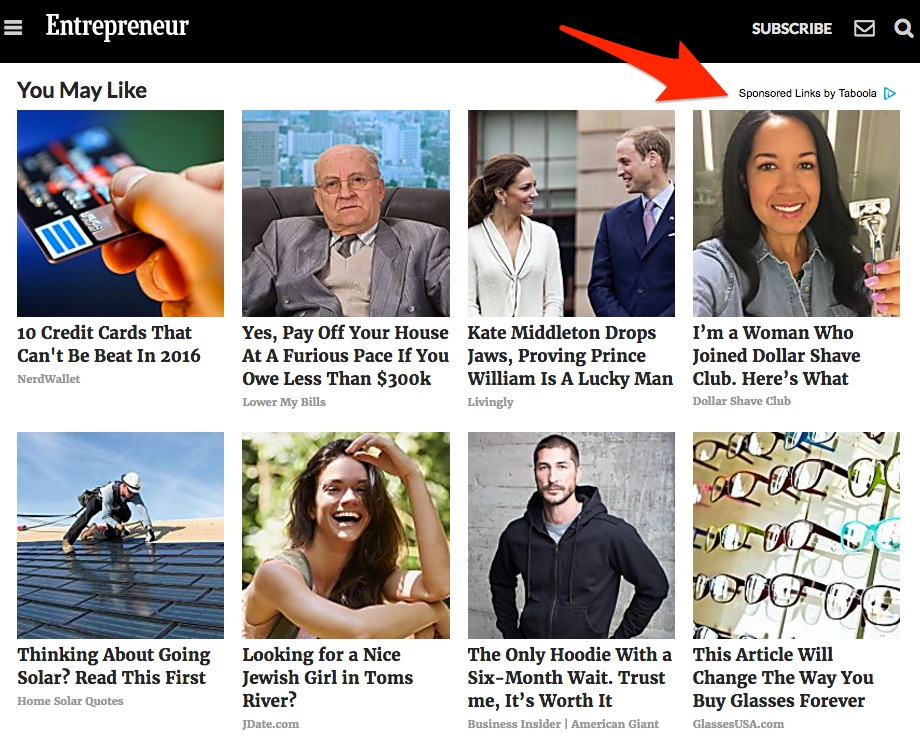
Now I’m not sure about your blog, however most of my niche blogs are hard-pressed to attract even one-tenth of this monthly traffic after years of growth, so if you are just starting out on your journey to blog monetisation, I have outlined some alternative native ad networks below with lower traffic expectations that you really should consider.

Revcontent

Revcontent is well-renowned as high quality native advertising network. This is important to be aware of, as it directly impacts their publisher approval policy and means that they only approve websites and blogs off the highest calibre. It’s hard to define precisely what this means, but there is no doubt in my mind that this means objectionable content (such as pharmaceuticals, adult content and malware) as well as poor quality website design and content will result in your blog being disapproved from their network. Adding to Revcontent’s ‘high quality’ approval criteria, is their requirement for 50,000 – 80,000 visits per month.
According to Revcontent, 94% of applications are disapproved, leaving only 6% of bloggers/publishers with the opportunity to utilise the Revcontent native ad widget. Unfortunately I’m not one of the lucky 6% to be approved (to be honest, I don’t have a blog that currently qualifies), so if you have any experience with this program first-hand I’d love to hear it in the Comments section.
Anecdotally CPMs are double what you would expect from Google Adsense, and also some of the highest in the native advertising sector, so Revcontent is certainly a native ad network to aspire towards if you don’t yet meet their traffic requirements just yet.
Publisher Minimum Traffic: 50,000 monthly visits
Publisher approval rate: 6% of publishers approved
Estimated Revenue (CPM): $3 – $40

MGid

Mgid offers a couple of fundamental two major advertising options, the first of which consists of progressive display ad formats (such as rich media display ads, obviously not the focus of this analysis). The second ad format offered by MGID (and obviously more pertinent) is the ad format designed in the words of MGID to ‘re-circulate visitors’. This more frequently known as MGID’s ‘Promoted Content’ widget.

Unlike some of the native ad widget options, MGID allows a degree of customisation to assist with integrating with your blog’s look and feel. Further to this, if you choose to incorporate MGID’s native ads into your website, you are able to choose the kind of content which appear with the widget, meaning that the content being displayed will generally be aligned with the webmaster’s preferences.
A huge bonus that the MGID network has going for it versus the native ad network options mentioned previously, is the traffic minimum that it sets for publishers. This weighs in at the princely sum of zero. Yes, you read that correctly, MGID has a traffic minimum of nought, which means anyone blogger or website that attracts traffic from legitimate sources and covers acceptable topics (nothing risque or legally questionable) will be graced within entry into the program.
If you are a blogger just starting out and are yet to meet the traffic minimums of other programs, I’d suggest considering MGid to dip your toe into the native waters.
Publisher Minimum Traffic: None
Estimated Revenue (CPM): $1 – $3
Ayboll

Let me preface this by saying Ayboll has no publisher restrictions for signup. You could have a blog attracting 2 visits per year written in the least known dialect of the smallest understood language in the world, re-publishing disproven theories about astrophysics from the early 1900’s….and you will still get accepted into the program. Needless to say this is a network that you will need to trial before you commit to for the long-term.

I’ve not had experience using their ad widget first hand, but have heard mixed reviews, some touting eCPMs of $2-$6 which is fantastic, and others receiving virtually $0 revenue after serving almost 100,000 ad impressions. As is often the case in the online marketing world, one blogger’s treasure is another blogger’s trash! I think the takeaway from these mixed reports, is to trial it for yourself (particularly if your traffic levels are low and you have limited options available to you), and please let me know of your experiences in the comments section.
Publisher Minimum Traffic: None
Publisher approval rate: All sites approved
Estimated Revenue (CPM): $6
Adnow

Adnow is a content recommendation network. What I like about it versus the other second tier native ad networks, is that it adopts the KISS principle and keeps it simple, offering only one advertising unit, a ‘related content’ widget. The widgets are completely customisable and allow the blogger/webmaster to tailor the advertisement to different placements on-site, such as the sidebar, or after an article. It’s worth experimenting with these placements as some will yield much higher click-through rates than others, and of course, you get paid for every click that you generate from your blog.
Unlike the big guys including Outbrain, Taboola and Revcontent, Adnow does not ask for a specific traffic requirement for bloggers looking to join their network. What they do stipulate however, is that your blog must contain high quality content and receiving some traffic before it will be approved. So don’t sign up before you have finalised your website’s design and started fleshing out your content, because every site is manually reviewed before approval.
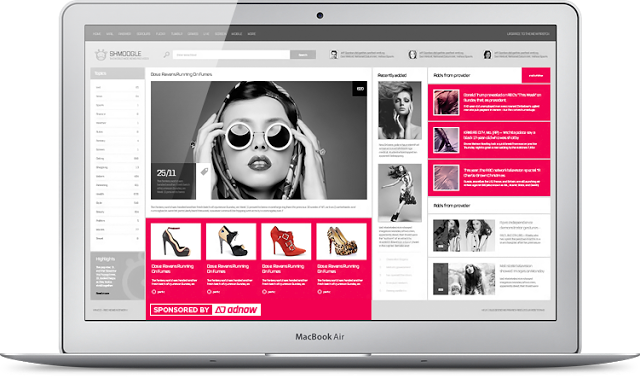
One slight drawback of Adnow is the lack of control they offer the blogger regarding what appears in the widget. This isn’t a show stopper by any means, but is worth flagging for those who are highly sensitive to the ad content which may appear alongside their articles (let’s face it, if you are considering generating revenue from programmatic advertising of any sort, you have probably already made the decision not to be too picky about the content of the ads that may appear on your blog). At the end of the day, it’s in the ad network’s best interest to present relevant content to your user as this will elicit the most clicks for their network and their advertisers (and that is ultimately what keeps everyone happy, including the end user).
Publisher Minimum Traffic: None
Estimated Revenue (CPM): $0.10 – $2
WordPress plugin? Yes
How much can you expect to make?
Like any advertising option, your blog, your traffic and your location will determine your revenue potential from Native Advertising.
For native networks revenue varies from $0.10 to $40 CPM, though it would be fair to expect an average CPM of $0.25 when you are just starting out, with the view to optimise placements to those which are receiving the most clicks.
The beauty of native ads, is that you can generally run them in conjunction with Google Adsense, meaning that your website can generate revenue from multiple sources (and also to cater for multiple visitor preferences, as some users aren’t included to click on Adsense ads but are inclined to click Native Ads, and vice versa).
Would I recommend Native Ads as the primary source of income from your blog?
If you have a blog with enormous levels of traffic and fun content, I may recommend native ads as your primary source of revenue (Buzzfeed.com is a great example of a site that fits this mould).
Alternatively, if you have a blog and feel opposed to traditional banner advertising because it simply looks to ‘ad like’ and detracts from the user experience, then I would strongly suggest considering native ads as your primary source of revenue.
For those of you who are neither picky nor traffic magicians (which I would imagine is the majority of bloggers out there), I would recommend trialling Native Ads in conjunction with Adsense and potentially other sources such as In-Text ads, with the view to identifying what works best and minimising your ad placements to those generating the most revenue in the long-run.
4. Sponsored Posts and Endorsements
Once upon a time it was called advertorial. Now it’s called a sponsored post. The future generation is already calling it an influencer outreach piece.
Whatever you want to call it, a Sponsored Post is essentially a paid placement that is thoughtfully developed by you to resonate with your audience just like any other (non-paid) piece would. It’s a paid piece of editorial that takes the guise of a regular, everyday post. If you can pull this off regularly, without your audience becoming frustrated with the commercial motives behind the article or simply ‘smelling a rat’, then you have the makings of a consistent and reliable income stream.
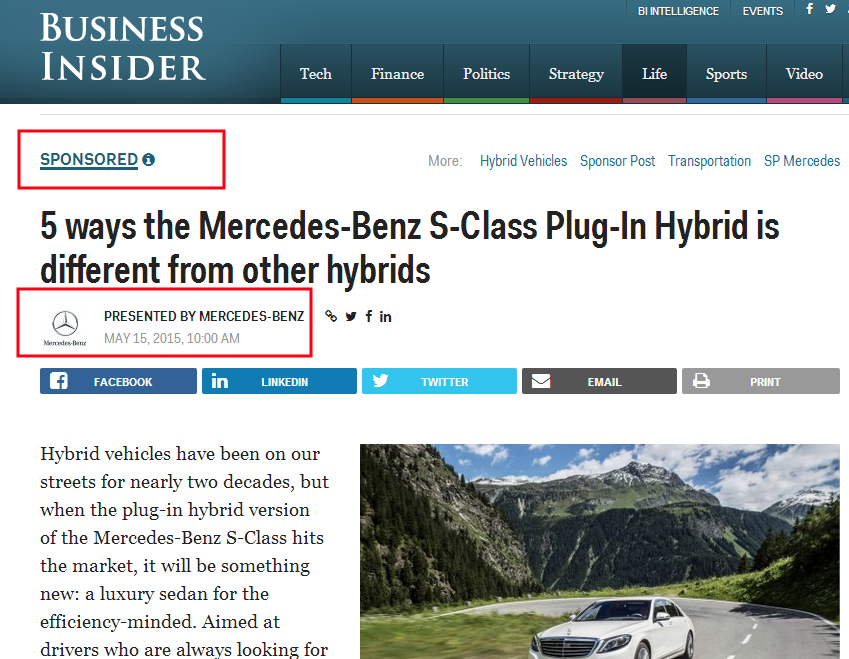
The main difference between a Sponsored Post and a regular post, is a preceding byline. This is also known as Blogger Disclosure and, to be frank, it’s a pretty big deal in the blogosphere. While disclosure of sponsored posts is not legally mandatory in many countries across the world, I firmly suggest you include some form of disclosure statement for paid posts withinin your blog to remain transparent with your audience and maintain integrity and trust. Google also stipulates that all paid pieces of content should be labelled accordingly, or penalties in Search engine visibility may be applied. In other words, abide by the rules or you could be back-handed into the depths by the big G!
Here are a couple of options you can consider for the byline on your blog’s Sponsored Posts (you are encouraged to tailor the wording depending on your blog’s own personality and tone of voice):
- “ This post was sponsored by [brand name here]”
- I received a free [product name] in exchange for writing this review
- This post contains sponsored content from [Brand X]
- Although this post in sponsored, all opinions are my own
Make sure these announcements are at the start of the post. Disclosures left to the end may be perceived as misleading.

How do you price a Sponsored Post?
Pricing for a sponsored post is not about traffic alone. Sure it helps, but the value your blog brings to the table is not about the number of eyeballs it attracts, it’s about the number of people who will potentially take action once it is viewed.
A logical starting point for pricing is $10 per 1,000 monthly pageviews to your blog. If you want to, you can then consider adding multipliers for how targeted the traffic is to your niche and how actively engaged your audience is.
| Visitors Per Month | Standard Visitors | More Engaged (2x) | Fanatical (5x) |
| 1,000 | $10 | $20 | $50 |
| 5,000 | $50 | $100 | $250 |
| 20,000 | $200 | $400 | $1,000 |
| 50,000 | $500 | $1,000 | $5,000 |
The thing to remember is that you dictate the price based on the perceived value of your voice as an authority within your niche, as well as the access to your audience that a Sponsored Post affords.
Would I recommend Sponsored Posts as a primary source of income?
Sponsored Posts are a great source of consistent income. For high value niches they can translate to respectable chunks of revenue, and when the product or brand in question is hot off the press, Sponsored Posts can allow access to cool new products and editorial angles at little to no cost.
However, they are not passive income streams and therefore should be assessed accordingly. Some blogs simply won’t benefit at all from the Sponsored Post model due to pure economics (the effort versus rewards simply doesn’t stack up), and some bloggers will not be at all enthused by the additional obligations that working with ‘Brand X’ will entail.
While potentially lucrative and definitely a complimentary income stream to most other pure advertising options mentioned in this series, Sponsored Posts are an acquired taste that is somewhat addictive for those who enjoy the taste, and a complete no-go zone for those who don’t. I’ll let you be the judge.
5. Affiliate Marketing
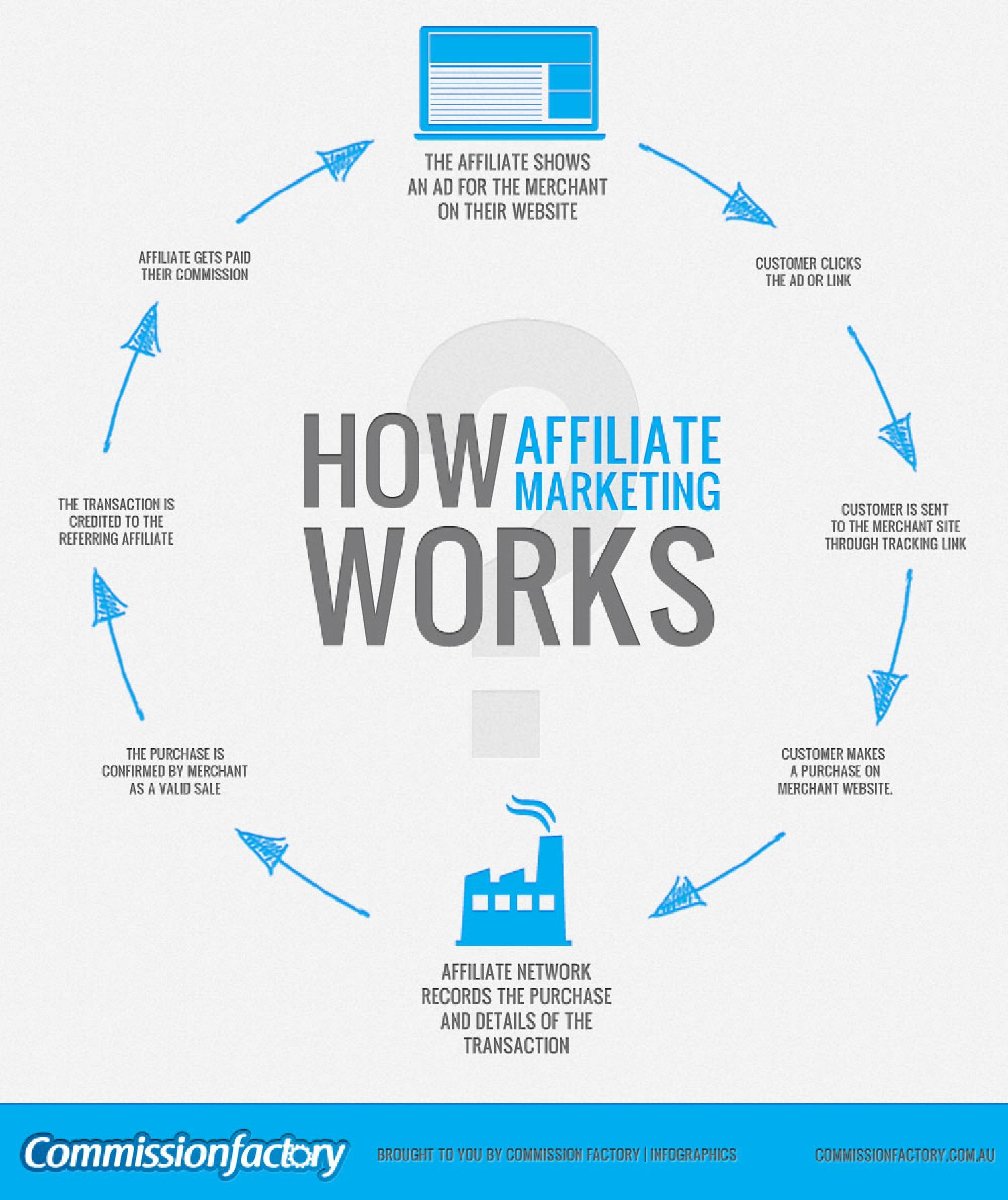
Affiliate marketing was invented many years before the internet was born. Simply put, it is a system of referral based marketing whereby if you refer someone to a product and that person buys the product based on your recommendation, you will receive a commission for the sale.
Affiliate marketing is great because you can sell products you love and have had a positive experience with, without having to handle the physical products or worry about shipping and fulfillment.
In the online world, an affiliate tracking system is what allows for greater scalability and accuracy than the (non-web based) referral marketing systems of yesteryear. A tracking URL (a unique link given to you by an affiliate network or advertiser) is used to keep track of all the traffic and sales you make via your blog or website.
How is this relevant to you and your blog? Say you recently read a hugely inspirational autobiography, and wanted to share just how great it was with the readers of your blog. So you write a glowing review about the book and publish it to your blog, including an Amazon affiliate link showing people where they can go to buy the book. For anyone who clicks the link and buys the book, you automatically receive a 6% slice of the purchase price (and as an added bonus, not only will you receive commissions on the purchase price for that specific book, but also any other goods they purchase from Amazon within the same session!). It’s pretty grand, isn’t it.
How does the Affiliate Marketing technology work?
Ever noticed how that new pair of black Nike sneakers in Size 9 that you really shouldn’t buy keeps following you around on other websites? That is appearing because you’ve been ‘cookied’.
Affiliate marketing relies on a piece of technology known as a ‘cookie’. A cookie is a small file which resides within a user’s web browser (such as Google Chrome, Firefox or Internet Explorer) and stores information such as login information, shopping cart contents or the pages you have previously visited. In affiliate marketing, a cookie is generated and stored in the user’s web browser whenever they clicks on an affiliate link. Affiliate networks are then able to track whether the click results in a sale at a later date, and if so, pay you a commission for your contribution to securing the sale.
The way it works, is that when a user visits a blog which contains affiliate links (just like thefreedomchaser.com) and clicks on one of these links, the user’s browser then receives the affiliate network’s tracking cookie that identifies the advertiser, the blog, the specific link and commission amount. When they eventually purchase the product (or potentially even another product altogether from the advertiser’s website), KACHING(!!), the cash register sounds and you receive your commission.
What is an ‘Affiliate Network’?
An affiliate network is a third party which acts an intermediary between a publisher (the ‘affiliate’) and a company (the ‘advertiser’), to allow publishers to find and join affiliate programs.
There are many affiliate networks that exist, and each has been developed to allow bloggers and website owners to participate in affiliate programs and generate a passive income. From an advertiser’s point of view (also known as the merchant), the key benefit of offering an affiliate program is to reach a larger audience, by having their products or services promoted to the wide network of bloggers and websites who are members of the affiliate network.
Who are the major global Affiliate Networks?
There are hundreds of Affiliate Networks available online. Some focus on specific niches, such as ecommerce stores, or ebooks, and others take the broader brush approach and cover a wide variety of products and industries. While there may be some niche networks that may be well suited to your blog, here are seven Affiliate Networks I would strongly suggest any new-comer to the affiliate world should consider.
- Commission Junction
- Clixgalore
- Shareasale
- Clickbank
- Commission Factory
- Amazon
- Ebay
You’ll probably notice a couple of familiar names in this list, most notably Amazon and Ebay. While these are not widely known to the public as affiliate networks, the enormous range of sellers and products that each of these sites offers for sale at any given time, means that they cover a larger product range than some of the major networks! For this reason, Amazon and Ebay can provide huge affiliate revenue opportunities for bloggers.
The following is a brief overview of each of the seven major affiliate networks I would suggest you enrol and experiment with when delving into affiliate marketing (NB: they are all free to join, so you have nothing to lose!)
Commission Factory

If you are based in Australia and/or run an Australian based blog or website, you simply cannot go past Commission Factory. Commission Factory is the leading affiliate network in Australia and offers commission-based affiliate programs for a wide spectrum of industries including:
- Clothing & Fashion (e.g. Surfstitch, The Iconic, Rodd & Gunn, All About Eve)
- Homewares (Pottery Barn, West Elm)
- Food & Drink (Woolworths, Vinomofo)
- Travel (such as Uber, HotelsCombined, Mantra)

The vast majority of affiliate offers within Commission Factory are, you guessed it, commission-based meaning that you will receive x% of each sale attributed to your unique affiliate links, however there are also a small number of Cost Per Lead (CPL) offers within the Finance vertical too.
Total affiliate programs (merchants): 250+
Total publishers: 10,000+
Specialties: Fashion, Travel, Online Retail
Top Countries: Australia, New Zealand
Sign up for Commission Factory >>
Commission Junction
CJ Affiliate by Conversant, still more commonly referred to by its former name Commission Junction, is one of the largest and more popular affiliate networks online. Being founded in the U.S. in 1998, CJ has been growing steadily for almost 20 years and has established itself as one of the true linchpins within the Affiliate Network scene.
Being one of the leading international Affiliate Networks, the range of products and services you can promote via CJ Affiliate by Conversant network spans across a huge number of categories. These include:
- Business (e.g. Trend Micro anti-virus software)
- Clothing & Apparel
- Health & Wellness
- Online Services
- Sports & Fitness
With such a vast number of affiliates, there is almost certainly going to be at least one affiliate program (i.e. product) within the CJ network that will be relevant to your blog or niche. The real challenge will be finding that product amongst the 2,500 companies enrolled within the network.


Total affiliate programs (merchants): 2,800+
Specialties: Software, Physical products, Web Hosting, Domains
Top Countries: US, Canada, UK, France, Germany, Spain
Signup to Commission Junction >>
Clixgalore

Clixgalore is another affiliate network that happens to be based out of Australia, but don’t let that fool you, Clixgalore is a seriously international Affiliate Network, specialising in information products.
Their interface is (let’s face it) old and clunky, but what they lack in design, they make up for in commissions potential!

Some of the products listed on their network pay up to 80% of the purchase price in commission….if that doesn’t make you grin, well this will….that is effing INSANE commission!
One thing you should really consider is Clixgalore’s product range, it’s actually perfect for bloggers. Why? Because Clixgalore specialises in digital products (such as ebooks and software), which are some of the most well-suited products to endorse and sell online.
Total affiliate programs (merchants): 2,000+
Specialties: Software, eBooks
Top Countries: US, Canada, Australia
Shareasale

Shareasale has been around for over 15 years and has over 4,000 merchants currently enlisted. Yep, that’s a lot companies selling products that you could earn commission from. Most of these products pay-per-sale that your blog generates, but there’s a couple of hundred merchants that also offer pay-per-lead (CPL) programs too if that’s of interest to you.
Shareasale’s merchants (i.e. the companies that sell their products through Shareasale) skew towards the technology sector, but they span a lot further too. Here’s a sample of their leading categories and merchants:
- Blogging: StudioPress, WP Engine, Hootsuite
- Clothing and fashion: Modcloth, Warby Parker
- Food and fitness: Reebok, Kona Kase, World Genetics Nutrition
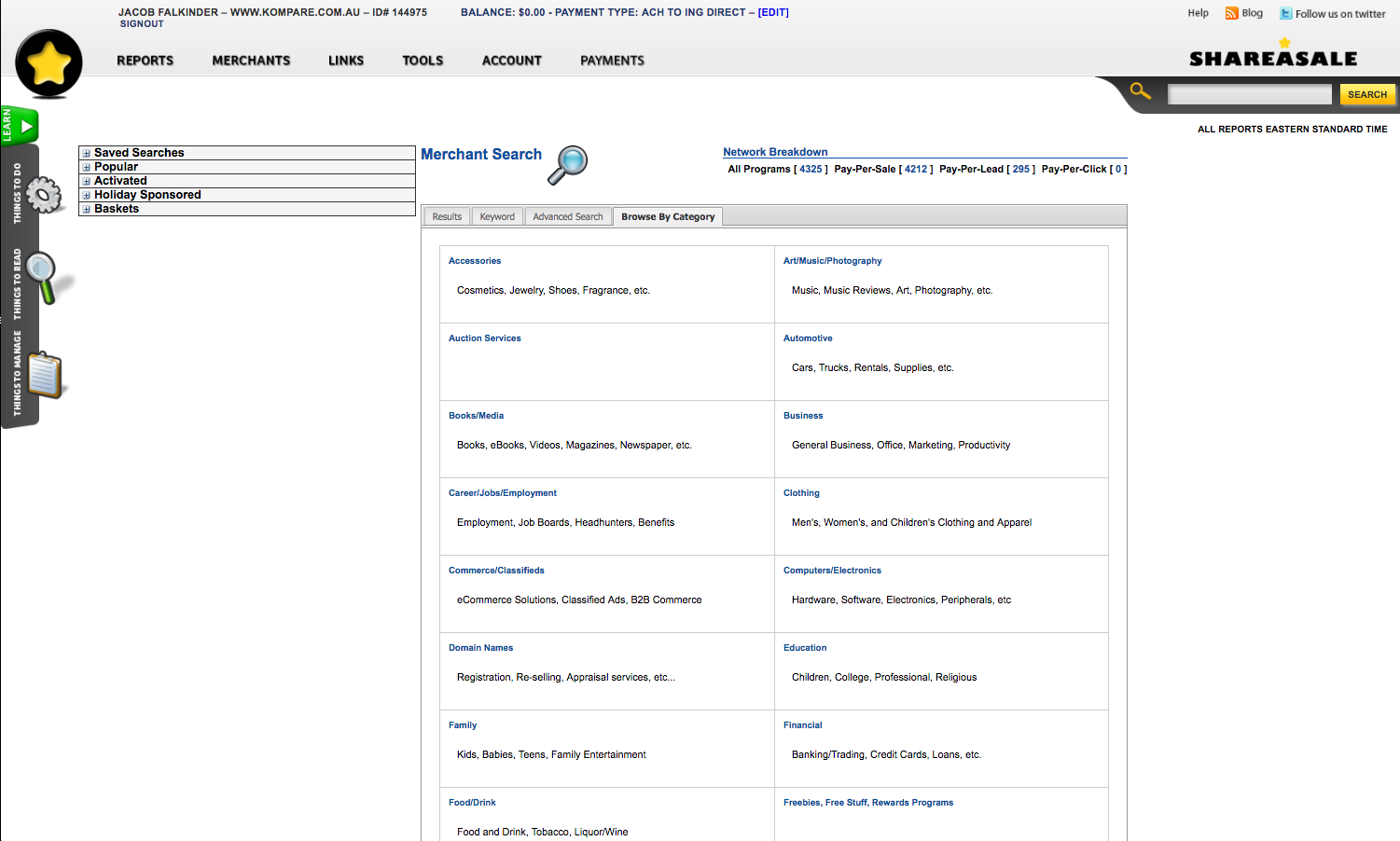
Anecdotally, I hear a lot of people who are active in affiliate marketing say they prefer the Commission Junction offering and user experience, however Share A Sale (SAS) makes more money for them. For this reason, if you are a relatively new to the game I would strongly suggest starting with ShareASale and working your way up to other networks such as CJ as time moves on.
Total affiliate programs (merchants): 4,000+
Specialties: Wide variety, from WordPress themes to Fortune 500 companies
Top Countries: US, Canada, Europe, Australia, Asia
Clickbank

ClickBank’s product range is orientated around digital products, such as information products, video tutorials, membership sites, eBooks and online courses, although there are also some physical products.
Most of the companies and products listed on Clickbank offer bloggers and websites offer a commission for each sale they generate, there are a couple that offer cost-per-lead incentives too. One thing to be slightly wary of, is the number of products on Clickbank about ‘making money on Clickbank’. Unless our blog is closely related to this topic, I’d personally steer well clear of these products!

Total affiliate programs (merchants): 12,000+
Specialties: Digital products, such as training courses, ebooks, software
Top Countries: US, UK, Australia
Amazon Ads
Being one of the world’s biggest online retailers, what would you expect Amazon’s would be Amazon’s biggest growth area over the last 12 months? Shoes? Watches? Camping gear?
Well, it may come as a surprise that for the world’s biggest online retailer, Amazon, online advertising has been the highest growth area for the company in the past 12 months. No, not selling products and goodies….selling ads! When you peel it back though, it makes complete sense, as Amazon has access to a huge amount of transactional and behavioural data that would rival Google and Facebook anyday. And as well know, it is rich data which powers the most sophisticated advertising platforms on the web, like that aforementioned social behemoth.
For bloggers, Amazon Native Shopping Ads are a great potential revenue spinner as they are contextual. What this means is that they leverage the on-page content, and display ads that are relevant to the articles that surround the ad. This is good, because let’s face it, ads that are random or generic, never get clicked!
Essentially, there are two big advantages to running Amazon Native Shopping Ads on your blog or website:
- The first (just like Google Adsense), is that your Native Shopping Ads are based on the page content on which they appear. If you have a post that’s all about cameras, the ad will likely show links to popular cameras on sale.
- Secondly (and again drawing parallels to Google AdSense); Amazon Native Ads are responsive to your website visitor’s own Amazon browsing history. So if they they’ve been shopping for sneakers on Amazon, your Amazon Native ad unit is more likely to show sneakers to them too!
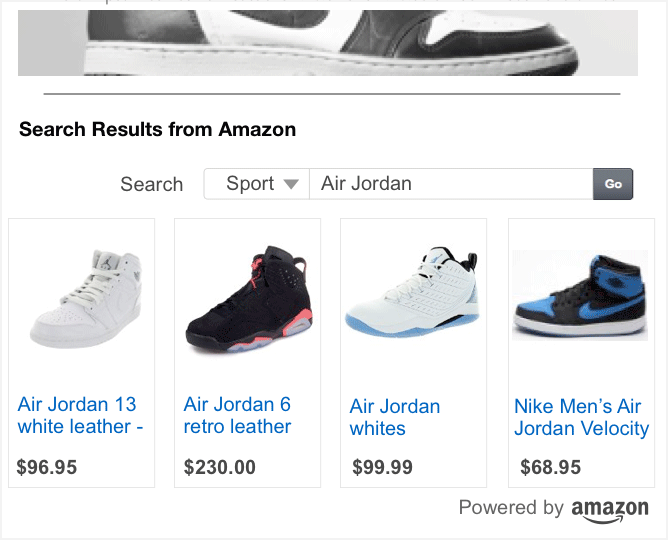
Each of these factors significantly increases relevance to your visitors, and therefore should dramatically improve your conversion rate, which means more Amazon affiliate commissions for you! This is because the ads displayed on your site are well-suited to each individual user, as well as the content surrounding each Amazon ad.
I’ve mentioned Google Adsense several times during my review of Amazon Native Ads…while both systems are quite similar in terms of their ability to create contextual ads which can generate decent amounts of revenue, they are also very different in the ways their revenue is attributed.
For Amazon Native Ads, unlike Google Adsense (which generates you an income for each click), Amazon allows you to earn money for actual. At this point it’s also worth reminding you, Amazon also pays you a commision for any other products your referred users purchase during the same session.
Confused? Here’s an example….
You have a visitor name Fred:
- Fred clicks on one of Amazon Native Shopping Ads for a new paperback book about Content Marketing on your blog, and ends up on the Amazon website to read the Amazon reviews about the book
- He purchases a completely different book from Amazon about Conversion Optimisation
- You still get a commission for the Conversion Optimisation book Fred bought (between 4% and 8%)
- And the best part….if Fred splashed out on a new set of golf clubs during the same purchase (valued at $2,000) you also get a commission on those too! In this case that’s $80-$160 from just one referral.
Not bad, huh? And the best part is, Amazon.com is one of the highest converting websites in the world, so if you manage to drive your visitors there they are much more likely to convert to sales. Happy days!
Total affiliate products: 480,000 (in the U.S.)
Specialties: Sports & Outdoors, Clothing Shoes & Jewelry, Home & Kitchen, Office Products, Electronics, Beauty, Baby, Grocery and more
Top Countries: US, UK, Germany, France, Japan by volume
Signup to Amazon Associates >>
6. Cost Per Lead (CPL) Marketing
Max Bounty
MaxBounty is a leading CPA (Cost Per Acqusition) network, however unlike most of the other CPA networks mentioned in my recent Affiliate Marketing article, Max Bounty also has a diverse range of CPL offers.
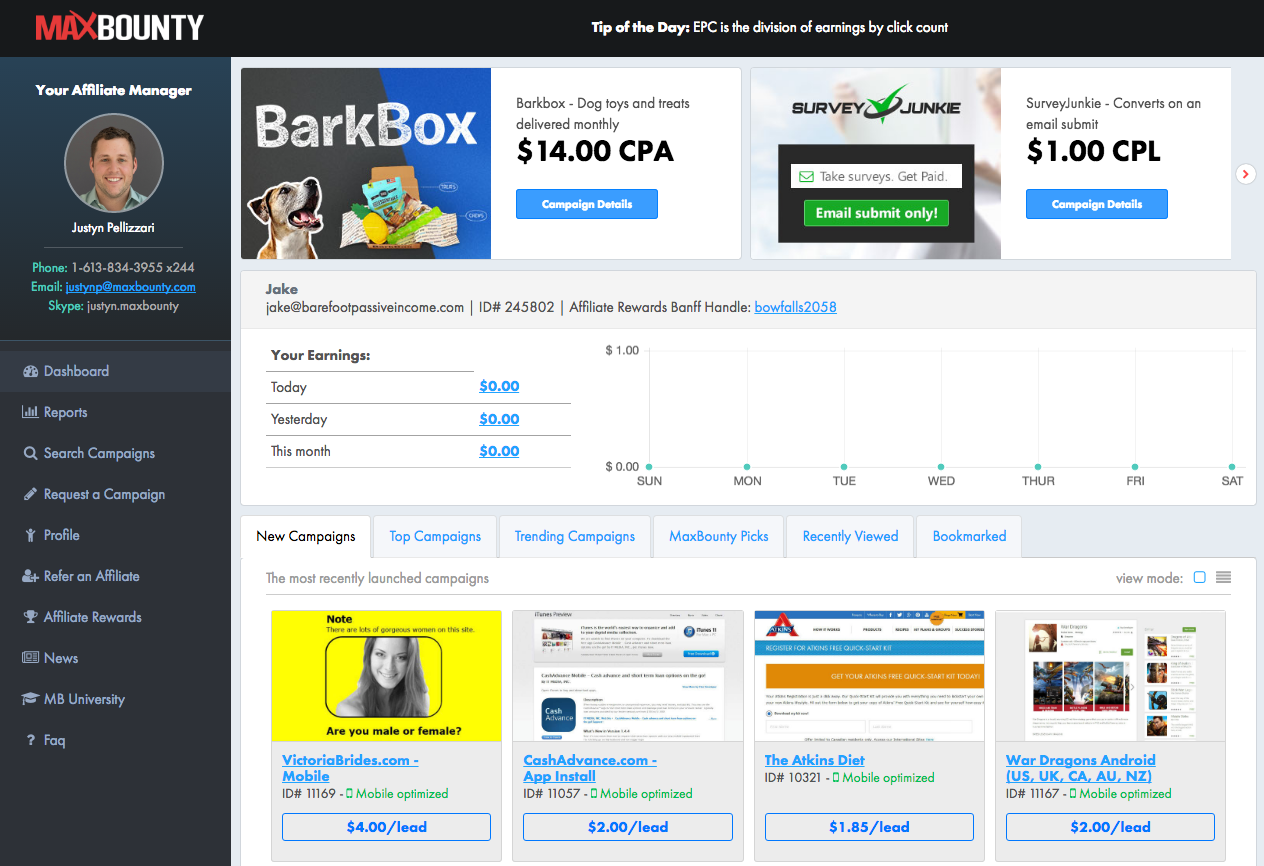
I like CPL offers because, let’s face it, it’s way easier to find a lead than to make an actual sale. The other great thing about most CPL offers is that they are usually incentivised; the prospect is encouraged to become a lead by the advertiser dangling a carrot such as a free trial, a free sample or going into the draw to win a prize. Needless to say, if you find the right offer, CPL conversion rates can dwarf CPA conversion rates by a multiplier of 10 in some cases!
Examples of the CPL offers Max Bounty has within their network are:
- Signing up to Nespresso coffee samples
- Entering a competition to win the latest iPhone
- Signing up for a trial of Scribd which is an audio book streaming service
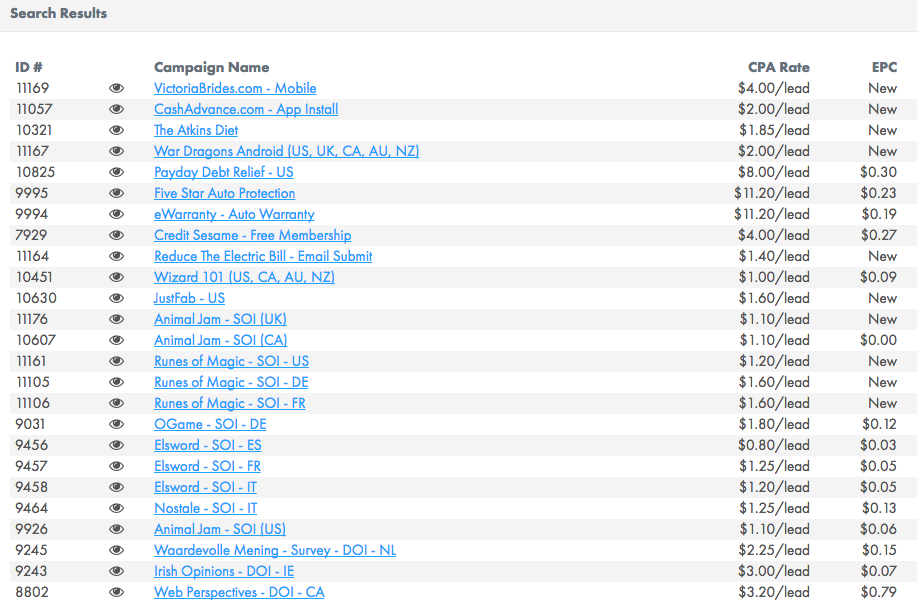
There are hundreds of offers within the network, and aside from the validation process during setup (they will need to call you to validate your identity and account), signing up with MaxBounty is a breeze and approval rates for new affiliates (i.e. bloggers like you and I) are quite high. I recommend signing up and giving Max Bounty a test for yourself.
Total merchants: 1,000+
Specialties: Ecommerce, Email Submits, Free Stuff, Surveys, Sweepstakes, Travel
Top Countries: US, UK, Australia
Panthera
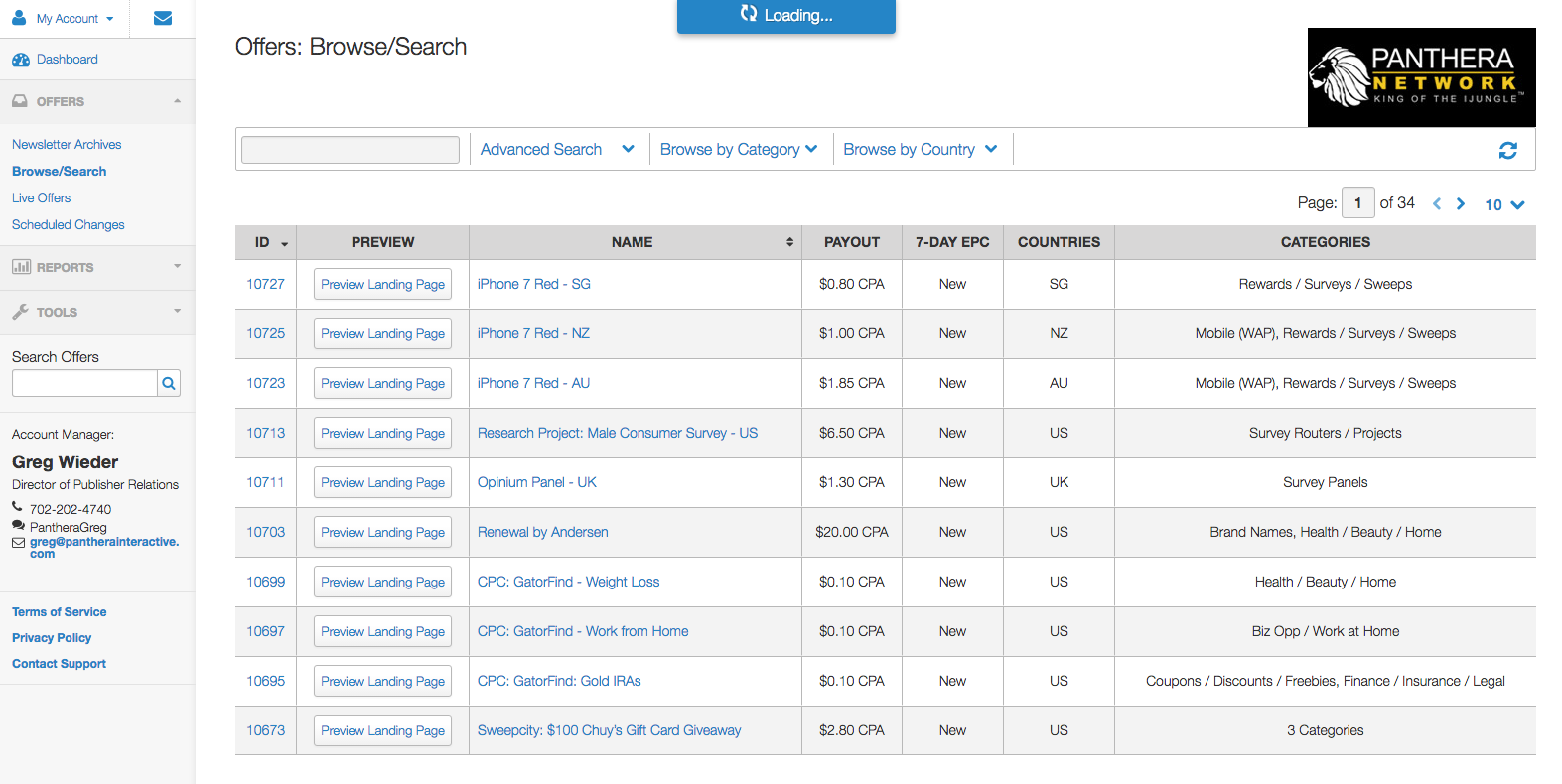
Panthera Network is another leading CPA Affiliate Network offering not only CPA offers, but also an extensive selection of Cost Per Lead (CPL) offers. There are thousands of bloggers, websites and publishers who have signed up to this performance network, churning over millions of leads and sales every month.

As a member of Panthera you can look forward to a large selection of offers across a range of categories, with CPL offers such as:
- Free Betty Crocker recipes downloads
- Samsung Galaxy 8 Giveaways
- Free Cadbury Chocolate samples
Being a member of the Panthera network you can look forward to round the clock personalised support and top payouts.
Total affiliate products: 400+
Specialties: Surveys, Dating, Games, Shopping, Health/Beauty, Gambling
Top Countries: US, UK, Australia, Singapore
7. Selling Your Own Information Products
Ebooks
Not only is writing an ebook a great way to generate a passive income (once written and published), it’s also a tremendously successful way to establish some authority in your niche?
Why is writing a book such a great way to build authority?
The reason is, every man and his dog has a blog, but in relative terms there’s not many bloggers out there who can be bothered to maintain a blog and also write an entire book dedicated to their cause. (For more information about how to successfully become the most highly regarded authority in your niche, I highly recommend that you take the time to read Key Person of Influence, which offers a refreshing and highly actionable perspective on developing authority in your chosen niche, within the shortest possible timeframe).
Why write an ebook versus a regular (paperback) book?
There’s plenty of compelling reasons to write an ebook rather than an old-school paper version:
- Ebooks are way simpler to get into the marketplace than paperbacks, because you don’t need to tirelessly pitch your work to prospective publishers in the hope that one of them will offer you a deal, or alternatively raise and risk huge amounts of money upfront to publish your book independently like you need to do with a traditional book
- There are no major production overheads, as you don’t need to print any in advance….actually….ever!
- You have the opportunity to pocket 100% of the earnings from every sale yourself, depending on your distribution channel (as opposed to the print model, where you will need to share your cover sales with publishing houses, distributors and retailers)
- The market for ebooks is larger than print, Amazon has confessed to selling more ebooks than they do paper ones https://www.fastcompany.com/1754259/amazon-sells-more-e-books-paper-ones )
- Your readers and fans will carry ‘you’ in their pocket or bag everywhere they go, thanks to the rising popularity of Amazon Kindles, iPads and similar devices
To summarise, it goes without saying, that publishing an ebook has many advantages over publishing a traditional, paper-based book. It’s quicker and cheaper to get onto the shelves (albeit virtual shelves), and the potential for a passive revenue stream is far greater.
How to publish your ebook
There’s two options for publishing your ebook; doing it by yourself, or with the help of Amazon.
- Self-publishing requires you to host the ebook yourself, most likely as a downloadable pdf, on your own blog or on a separate dedicated website which you will need to develop
- If you go down this path and are using WordPress, I’d recommend
- To market your book, I’d suggest promoting it on an affiliate network which specialises in digital products
- Publish it on Amazon Kindle Direct
- If you think this is the option for you, then I suggest reading the 7 Day Ebook, mentioned below
Interested in finding out more about writing & publishing your first ebook?
Download the 7 Day Ebook to find out how you can write and publish your first ebook in as little as 7 days.